

Sustainability and Climate Change Update – April 2026
There continues to be a lot happening in the climate change and sustainability space. This update is set against a backdrop of rising petrol and diesel prices, driven by the USA-Iran conflict, reigniting debate about New Zealand’s electrification programme. At the same time, communities are beginning the post-Cyclone Vaianu clean-up and continuing recovery works after severe weather events in January. In this first update for 2026, we look at:
- A legal challenge to the Government’s Emissions Reduction Plan;
- Greenwashing challenges in both New Zealand and Australia;
- RMA National Direction changes – including the New NPS for Natural Hazards and amendments to the NES Electrical Transmission Activities;
- The Climate Change Commission’s role in the Waitangi Tribunal Climate Change Inquiry; and
- Status of legislative reform
Legal challenge to Emissions Reduction Plan
In March, Lawyers for Climate Action NZ and the Environmental Law Initiative’s legal challenge to the Emissions Reduction Plan (ERP) was heard before the High Court.
At the centre of the case is the Government’s ERP, a mandatory requirement under the Climate Change Response Act 2002. These plans are issued every five years and set out the actions for how New Zealand will meet its emissions budgets. The ERP covers all sectors including transport, energy, construction, waste, agriculture and forestry. You can read more about the ERP in our earlier article here.
The legal challenge has two main strands. First, it argues that Climate Change Minister (Hon Simon Watts) unlawfully weakened the first ERP (covering the period 2022-2026) through a flawed consultation process that dismantled several key climate policies (following the 2023 election).
Second, the claim challenges the Minister’s approval of the second ERP (covering the period 2026-2030). It contends that the current plan relies too heavily on forestry, particularly tree planting, to offset greenhouse gas emissions, rather than prioritising direct reductions. It also points to evidence suggesting New Zealand may struggle to meet its 2030 climate targets, especially for methane, and argues there is insufficient proof that the existing policies will deliver the required outcomes.
This case is one to watch. At its core, the case questions the legitimacy of the Minister’s approach to how New Zealand will meet its targets, and the level of certainty required about meeting the emissions budgets through the ERP. While each case ultimately turns on its own facts, similar challenges have occurred in both the UK and Ireland. The UK government was successfully challenged in the High Court in 2022 and again in 2024 over its strategies to reach net zero by 2050. Following the first High Court challenge the UK government updated its policies and commitments in 2023, with a delivery plan setting out how it would meet its emissions reductions. However, it was challenged again in 2024 over its revised strategy, with the High Court finding that strategy was unlawful in its assertion that the plans would enable the UK to meet its carbon budgets.
Greenwashing claims in New Zealand and Australia
Following on from Z Energy’s case at the end of last year, March and April 2026 has seen further movement with greenwashing claims in New Zealand.
Firstly, Lawyers for Climate Action lodged a complaint with the Advertising Standards Authority, alleging that Mazda New Zealand had misled consumers about the effectiveness of its tree-planting programme.
The complaint related to Mazda’s “Driving Good” campaign, which stated that for every new vehicle sold, the company funds native tree planting. It further claimed that over a vehicle’s five-year warranty period, those trees would mitigate the environmental impact of CO₂ emissions while also contributing to local ecosystems. Lawyers for Climate Action argued that these claims overstated the actual impact of the tree planting and breached the Advertising Standards Code, specifically Principle 2 and Rule 2(b) on truthful presentation, as well as Rule 2(h) relating to environmental claims.
The Complaints Board accepted the complaint for consideration. However, Mazda voluntarily removed the statement before the matter was heard, and the complaint was recorded as settled.
Meanwhile, this month (April 2026), Fonterra resolved proceedings lodged by Greenpeace New Zealand in 2024 regarding claims made on its Anchor butter packaging. Greenpeace alleged the labelling which included statements ‘100% New Zealand’ and “Grass Fed’ breached s 9 of the Fair Trading Act because cows’ diets in New Zealand are supplemented by non-grass feed, including palm kernel expeller. The proceedings were settled out of Court with Fonterra issuing a statement accepting the labelling was likely to mislead some customers and was in breach of s 9 Fair Trading Act. Fonterra removed the labelling and undertook not to use the label on packaging in the future. However, it stated the claim didn’t put at issue whether the use of the phrase “Grass Fed” on its packaging was misleading and made no admission in relation to that specific wording. You can read Fonterra’s press release here.
Across the ditch, in February 2026 the Australian Federal Court dismissed a greenwashing claim brought against gas company Santos by the Australasian Centre for Corporate Responsibility (ACCR). ACCR alleged that Santos had breached Australian consumer and corporations law by making misleading or deceptive statements about its climate credentials, emissions targets and Net Zero Roadmap.
ACCR’s primary argument was that Santos’ claims that it was a producer of “clean energy” and that natural gas was a “clean fuel” were misleading. ACCR considered they downplayed the environmental impacts of the company’s fossil fuel operations and created a false impression for investors and the public.
ACCR also challenged statements about Santos’ proposed hydrogen production. Santos had suggested it could produce “clean” or “zero emissions” hydrogen, when in fact it was proposing to produce blue hydrogen, which involves additional emissions. The ACCR argued these statements did not accurately reflect the true emissions profile of the hydrogen.
Thirdly, the ACCR argued that Santos overstated the credibility of its emissions reduction pathway, including its plans to reduce emissions by 26 to 30 percent by 2030, and achieve net zero by 2040. It was alleged these targets were based on assumptions and baselines that were not adequately modelled or justified.
Long story short, all of ACCR’S claims were dismissed with the Court finding that none of the statements were misleading or deceptive when assessed in context and from the perspective of a reasonable investor audience. However, we understand that ACCR has appealed the decision. The decision is an important landmark as it is the first time an Australian Court has ruled on a private greenwashing claim made against an Australian company. It establishes that greenwashing claims will turn on context, the audience and the evidence. It also recognises that both regulators and the courts can (and may) intervene where claims lack evidence or omit material qualifications.
National Direction
NPS-Natural Hazards
As part of the Government’s ongoing RMA reform, the new National Policy Statement for Natural Hazards (NPS-Natural Hazards) came into force on 15 January 2026.
The NPS-Natural Hazards covers the following natural hazards – flooding; landslips; coastal erosion; coastal inundation; active faults; liquefaction; and tsunamis. It applies to all environments and all zones, including the coastal environment. However, where there is a conflict with the NZ Coastal Policy Statement (NZCPS), the NZCPS prevails.
The NPS-Natural Hazards contains one objective – Natural hazard risk to people and property associated with subdivision use and development is to be managed using a risk-based proportionate approach.
Six policies implement the sole objective, which can be summarised as:
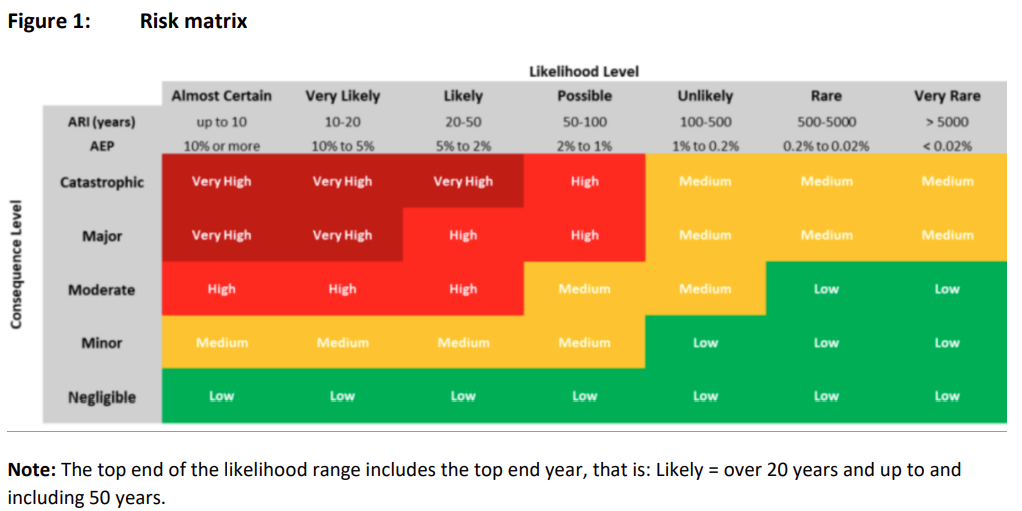
- Natural hazard risk levels need to be assessed using the risk matrix (Policy 1)
- The risk management approach must be proportionate to the level to risk (Policy 2).
- Very high natural hazard risk must be avoided (Policy 3).
- Where the subdivision, use or development will create or increase significant risk on other sites, then the risk needs to be avoided or mitigated using a proportionate approach (Policy 4).
- Best available information must be used for both risk assessment and decisions, even if the information is uncertain or incomplete (Policy 5).
- Potential climate change impacts must be considered out to 100 years in the future (Policy 6).
In short, the NPS-Natural Hazards requires subdivision, use and development to be assessed against the risk matrix below. Hazards are classified as low, medium, high or very high, depending on the likelihood and consequence of the hazard occurring. Responses must be proportionate – very high risks are to be avoided; and high and medium risks, or increasing risks on other properties, are to be avoided or mitigated.
Some other key takeaways include:
- While councils must give effect to the NPS-Natural Hazards from mid-January 2026, they are not required to initiate changes to regional policy statements or plans within a specific timeframe just to give effect to the NPS-Natural Hazards.
- The NPS-Natural Hazards does not apply to infrastructure or primary production activities.[1]
- Existing use rights under section 10 of the RMA are protected.
- Councils are still able to undertake a more conservative approach to managing natural hazards risks; and councils can manage risks from other natural hazards and activities not otherwise covered by the NPS-Natural Hazards.
Overall, in our opinion the NPS-Natural Hazards is a high-level step in the right direction and will be helpful to councils struggling with consenting decisions on high-risk land where they do not currently have good policy support to either decline applications or require more stringent conditions. It is also helpful in clarifying that events out to 100 years (accounting for climate change) should be considered in land use and subdivision decisions, and that councils should use ‘best available information’ to support decision making, even where that information may be uncertain or incomplete. This assists with scenarios where councils hold more up-to-date flood modelling information than what is currently provided in district plan maps.
On the other hand, the NPS-Natural Hazards remains high level, and does little to assist councils grappling with more difficult issues relating to adaptation outcomes and pathways, such as staged retreat or managed relocation as it explicitly states that existing use rights are protected.
NES changes to make EV charging infrastructure easier to install
Amendments have been made to National Environmental Standard for Electricity Transmission Activities 2009[2] to make it easier to install electric vehicle charging infrastructure. The changes come into force on 7 May 2026 and provide for a number of permitted activities, including:
- Private charging infrastructure (otherwise described in the standards as chargers that “are not available for public use”) where the chargers will comply with the relevant zone rules for buildings and structures in a plan;
- Charging infrastructure on transport corridors e.g. roads where the charger is associated with a permitted or consented parking space;
- Chargers that are ancillary to existing non-residential activities. This would likely include workplace and customer charging. Limits apply, including location, height, noise, earthworks and parking conditions. For example, in residential zones, chargers must operate more quietly, particularly at night (50 dB LAeq(15min) between 7am-10pm and 40 dB LAeq(15min) between 10pm-7am). In non‑residential zones, higher noise levels are allowed (60 dB LAeq(15min), but stricter limits apply where the charger is on the boundary with a residential site (55 dB LAeq(15min between 7am-10pm and 45 dB LAeq(15min between 10pm-7am).
- Stand-alone charging sites where charging is the primary activity on the site, provided the site is not in a residential zone, natural area, or historical heritage area. Limits apply to location, height, noise, earthworks, and the number of vehicles that can charge per hour.
The amendment to the NES-ETA follows the gazettal of 10 new or amended national direction instruments, including the NPS-Natural Hazards on 18 December 2025 (which came into force on 15 January 2026). The Government has indicated that further amendments will be made to several other national direction instruments in the coming months. National direction will be a key part of the new RMA replacement system.
Waitangi Tribunal Climate Change Priority Inquiry (Wai 3325)
The Waitangi Tribunal’s Climate Change Priority Inquiry (Wai 3325) continues to progress. Leave to bring the Inquiry was granted in 2024. The overarching claim is that the New Zealand Government’s response to the threat of global climate change breaches the Treaty of Waitangi, and that both the Crown’s actions and omissions have caused, and continue to cause, harm to Māori.
The inquiry focuses on the physical, spiritual, and socio‑economic impacts of climate change on Māori, as well as the adequacy of the Crown’s response. It also examines which Treaty principles should guide climate change policy, and how the Crown should meaningfully engage and consult with Māori when developing and implementing climate change measures. The most recent hearing took place between 16 and 20 March 2026.
As part of the Inquiry, the Climate Change Commission has, more recently, been asked to provide evidence. The Commission has responded noting that it is an independent Crown entity tasked with providing independent specialist advice, rather than being a Crown agency. The Commission stated that it is not a party to the Inquiry and does not seek to become one or to have the opportunity to file evidence. However, noting the importance of the Inquiry it has offered to provide assistance as required by the Tribunal.
We understand the Tribunal is proceeding with staged hearings, continuing in the coming months, before the Tribunal moves into deliberation and report writing.
Reform
Finally, we note that the Select Committee has recently wrapped up submission hearings in relation to the Natural Environment Bill and Planning Bill. The Select Committee is due to release its report on both Bills by 26 June 2026. The Bills will then proceed to Second Reading and progress through the House with the signalled intention to be passed before the 2026 election in November.
The Emergency Management (No 2) Bill – which is intended to replace the Civil Defence and Emergency Management Act (CDEMA) is also making its way through Parliament. The Bill responds to the Government Inquiry into the Response to the North Island Severe Weather Events in 2023 (Inquiry). The Inquiry covered Cyclone Hale and the Auckland Anniversary floods (both January 2023) and Cyclone Gabrielle (February 2023).
The Inquiry found that New Zealand’s emergency management system was not fit-for-purpose as it lacks the capacity or capability to deal with significant emergencies that affect multiple regions at once.
The Inquiry and past reviews have also highlighted that New Zealand has not achieved the whole-of-society approach to emergency management that Parliament envisaged when the CDEMA was first passed. The Bill is intended to implement parts of the Government’s response to the Inquiry that require legislative amendments (and address other issues identified with CDEMA). The Select Committee is due to provide its report on 9 June 2026.
If you would like further information about the Bills or their implications in relation to climate change matters, or if you’d like to discuss any of the matters set out in this update, please feel free to contact a member of our team.
[1] Note the National Policy Statement for Infrastructure 2025 specifically addresses natural hazards in the context of infrastructure – see Policy 1(2)(g), Policy 2(2)(e) and (f), and Policy 4(1)(f)(i).
[2] Through the Resource Management (National Environmental Standards for Electricity Transmission and Electric Vehicle Charging Infrastructure Activities) Amendment Regulations 2026 (NES-ETA)